Turmeric, a bright yellow, South Asian spice, is one of the most popular herbal botanicals used in supplements today. Its use dates back thousands of years, and it has long been promoted for its rich flavor and natural antioxidant and anti-inflammatory healing properties.
In addition to being used medicinally and as a powdered spice in cooking, turmeric is available as a dietary supplement in pill, capsule, and gummy form, as well as a tea. It has been studied extensively over the years for its possible disease-prevention and health-promoting properties.
However, more recently, potential risks—including 10 serious side effects of turmeric we’ll discuss below—have been highlighted, raising some questions about the safety of long-term turmeric supplement use.
What Is Turmeric?
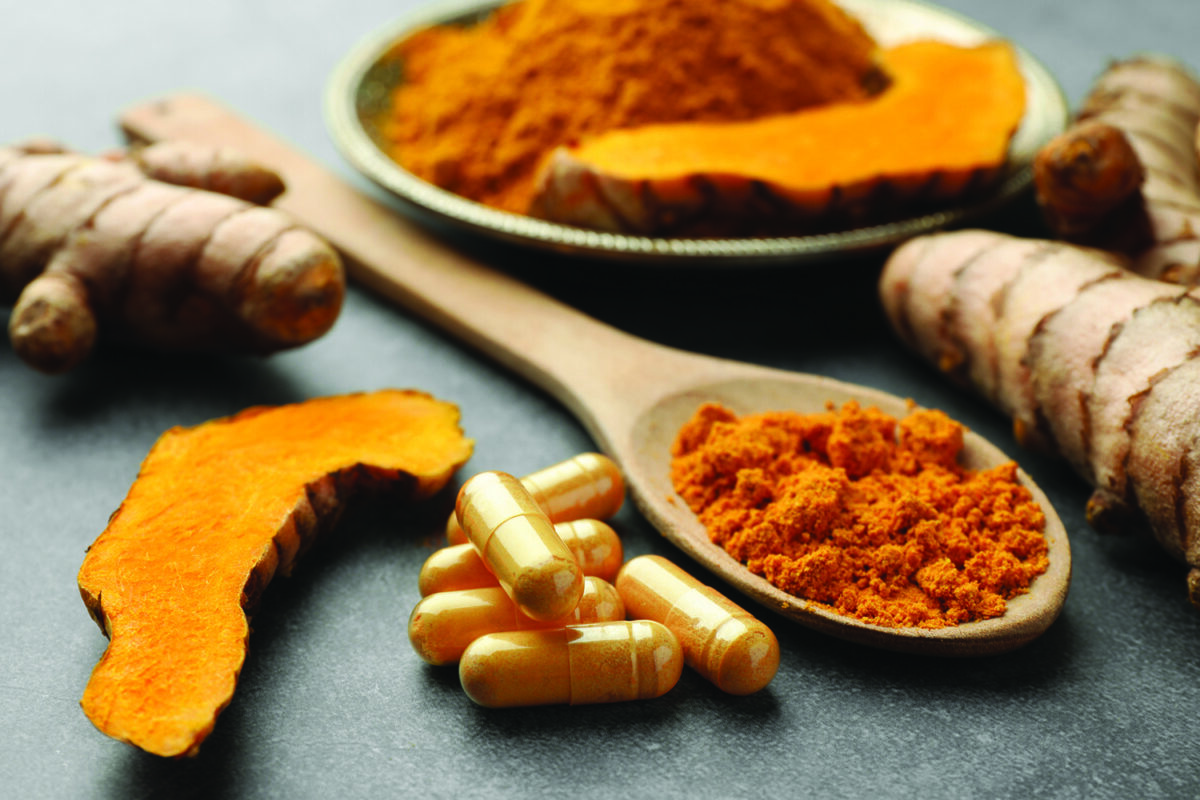
Turmeric, sometimes known as Indian saffron, is related to the ginger family, and fresh turmeric looks a lot like ginger, until you cut into its bright yellow-orange center. Like ginger, the stem of the turmeric plant, or rhizome, grows underground. Turmeric has been used in Chinese, Ayurvedic, and Thai traditional medicine for centuries to treat conditions ranging from indigestion, skin infections, and arthritis to the common cold and liver disease. It is also a common ingredient in Middle Eastern, Caribbean, and Indian cuisines. Curcumin, the major component in turmeric, is the compound that gives turmeric its neon yellow color. It is also the component of turmeric that is commonly credited for turmeric’s purported health benefits and side effect potential.
There are several steps in the production of the packaged turmeric spice that you buy in the supermarket, but basically the rhizome of the turmeric plant is cured, dried, polished (to remove impurities), and ground into a powder. Turmeric is sometimes used as a natural coloring in some mustards, and it is a major ingredient in curry powder. Both turmeric and curcumin are available as ingredients in many supplements that are widely available over the counter.
Why Turmeric Isn’t Always Safe
It’s important to keep in mind that, unlike prescription medications, dietary supplements like turmeric and curcumin do not undergo strict regulatory scrutiny from the U.S. Food and Drug Administration (FDA) before they become available for sale. The supplement industry basically operates based on the honor system. The FDA will step in only if problems are reported from consumers or health professionals.
The amount of turmeric typically used in cooking is considered quite safe. However, supplements, especially when taken in large amounts, are another matter. For instance, high doses may interfere with the effectiveness of some medications.
Several turmeric supplements claim to be “extra strength” and offer “ultra-absorption,” which makes more of the active ingredients available to the body. As such, these products can cause gastrointestinal (GI) side effects such as nausea, vomiting, gastroesophageal reflux disease (GERD, or acid reflux), diarrhea, or constipation, which are among the most common side effects, according to Douglas Kalman, PhD, RD, co-founder of Substantiation Sciences. Enhanced-absorption turmeric supplements usually contain black pepper, which changes the way the body processes turmeric and can increase the absorption of the curcumin in turmeric by as much as 2,000%, thereby raising the risk of side effects.
Curcumin is also available as a topical cream to treat acne, boils, bruises, eczema, and insect bites, and it can trigger an allergic reaction that causes hives and itching.
10 Serious Side Effects of Turmeric
Less commonly, turmeric supplementation—especially with high doses, enhanced-absorption forms, or concurrent use of turmeric supplements with certain medications—can have some potentially severe undesirable effects. These 10 serious side effects of turmeric include:
- Turmeric liver damage. While liver damage resulting from turmeric is rare, according to Dr. Kalman, turmeric has been indicated as the most common cause of herbal-related liver injury in the United States. Most cases are attributed to enhanced-absorption forms of curcumin, but there have also been instances of liver damage linked to the use of ground turmeric powder and even with turmeric herbal teas.
- Turmeric and kidney stones. Large, chronic doses of turmeric can increase the risk of developing kidney stones and may even contribute to kidney failure. That’s because turmeric contains a significant amount of oxalate, a component of the most common type of kidney stones: calcium oxalate stones.
- Turmeric and blood thinning/bleeding risk. Turmeric is a natural blood-thinner, so taking turmeric supplements along with blood-thinning drugs, such as warfarin, apixaban, rivaroxaban, or aspirin, can cause over-thinning of the blood, which can increase the risk of internal bleeding.
- Turmeric and gallbladder problems. The curcumin in turmeric has been shown to reduce the risk of developing gallstones, but in people with existing gallstones, it can trigger contractions of the gallbladder, potentially causing severe pain. While it might be effective as a preventive, turmeric should not be used as a treatment for gallstones.
- Turmeric and low blood sugar. Clinical trials have found that the curcumin in turmeric can significantly lower blood sugar and improve insulin resistance. However, combining turmeric supplements with medications designed to lower blood sugar could result in possibly dangerously low blood sugar levels (hypoglycemia).
- Turmeric iron absorption issues and anemia. Turmeric can decrease iron absorption in the intestinal tract by as much as 90%, which could create problems for people with iron-deficiency anemia. The higher the dosage of a turmeric supplement, the greater the interference with iron absorption.
- Turmeric allergic reactions. Rarely, turmeric supplement users may experience allergic reactions, such as itching, rashes, hives, and swelling. This risk may be higher with topical curcumin use.
- Turmeric digestive upset. Among turmeric’s most common side effects are GI issues, including nausea, upset stomach, and diarrhea.
- Turmeric drug interactions. Turmeric supplements can reduce the effectiveness of aspirin, ibuprofen, acetaminophen, and indomethacin. In addition, turmeric may interact with several medications, including certain chemotherapy and immunosuppressive drugs, potentially affecting their effectiveness or increasing side effects.
- Turmeric pregnancy concerns. According to the National Center for Complementary and Integrative Health (NCCIH, part of the National Institutes of Health), “The use of turmeric supplements during pregnancy may be unsafe. Little is known about whether it’s safe to use turmeric in amounts greater than those commonly found in food while breastfeeding.”
Who Should Avoid Turmeric
Given the uncertainty about the safety of turmeric supplements during pregnancy, pregnant women probably should avoid using them. Anyone diagnosed with iron deficiency anemia should avoid supplements containing turmeric or curcumin, as they could worsen the condition.
Also, it’s best to refrain from using turmeric supplements if you have gallstones or a history of calcium oxalate kidney stones or allergic reactions to turmeric or its components.
If you are receiving chemotherapy treatments, do not take turmeric or curcumin supplements without checking with your healthcare provider first. Turmeric supplements can interfere with the effectiveness of chemotherapy agents such as camptothecin, mechlorethamine, doxorubicin, and cyclophosphamide.
People taking the immunosuppressive drug tacrolimus may experience increased side effects from the medication if they also consume high doses of turmeric- or curcumin-containing supplements.
Safe Use Tips and Precautions
Most studies with turmeric have involved people with existing health problems.
“I think the health-supporting benefits of including turmeric as a spice in foods consistently adds to the natural antioxidant and anti-inflammatory nutrient intake, which is generally good for health,” Dr. Kalman says.
However, more is not always better. Turmeric supplements generally provide far greater amounts of turmeric and curcumin than what is used in cooking. An analysis of turmeric supplements done by ConsumerLab.com found that they differed greatly in the amount of turmeric and curcumin present, varying by as much as 140-fold. One supplement was found to be contaminated with lead.
If after taking turmeric supplements (especially high doses or enhanced-absorption formulations that contain black pepper) you experience fatigue, nausea, reduced appetite, dark urine, or yellowing of your skin, stop taking them, and contact your healthcare provider immediately. If you are taking any prescription medications or are on chemotherapy, check with your healthcare provider before taking turmeric supplements, and ask if there are any potential interactions that could either lessen or increase the medication’s effects.
Questions also remain about dosing of turmeric/curcumin, says Thomas J. Smith, MD, of the Sidney Kimmel Comprehensive Cancer Center at Johns Hopkins. Exactly how much turmeric is too much isn’t known, but if you’re going to take turmeric supplements, “Stick to 500 to 600 milligrams a day,” he says.
In addition, the NCCIH suggests that regular, not enhanced-absorption, turmeric supplements are probably safe to use for up to two or three months, while longer use has not been well studied.